The Mural That Broke My Heart
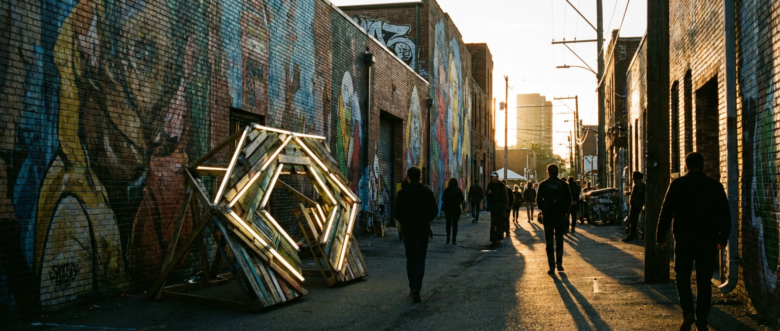
Last week I watched a crew install the most gorgeous 40-foot mural on the side of what used to be Martinez Grocery. The artist, whose wheat-paste work I’ve been following since she started hitting walls in the warehouse district three years ago, finally got her big commissioned piece. Bright birds soaring over geometric patterns that somehow capture both movement and stillness. It’s legitimately beautiful.
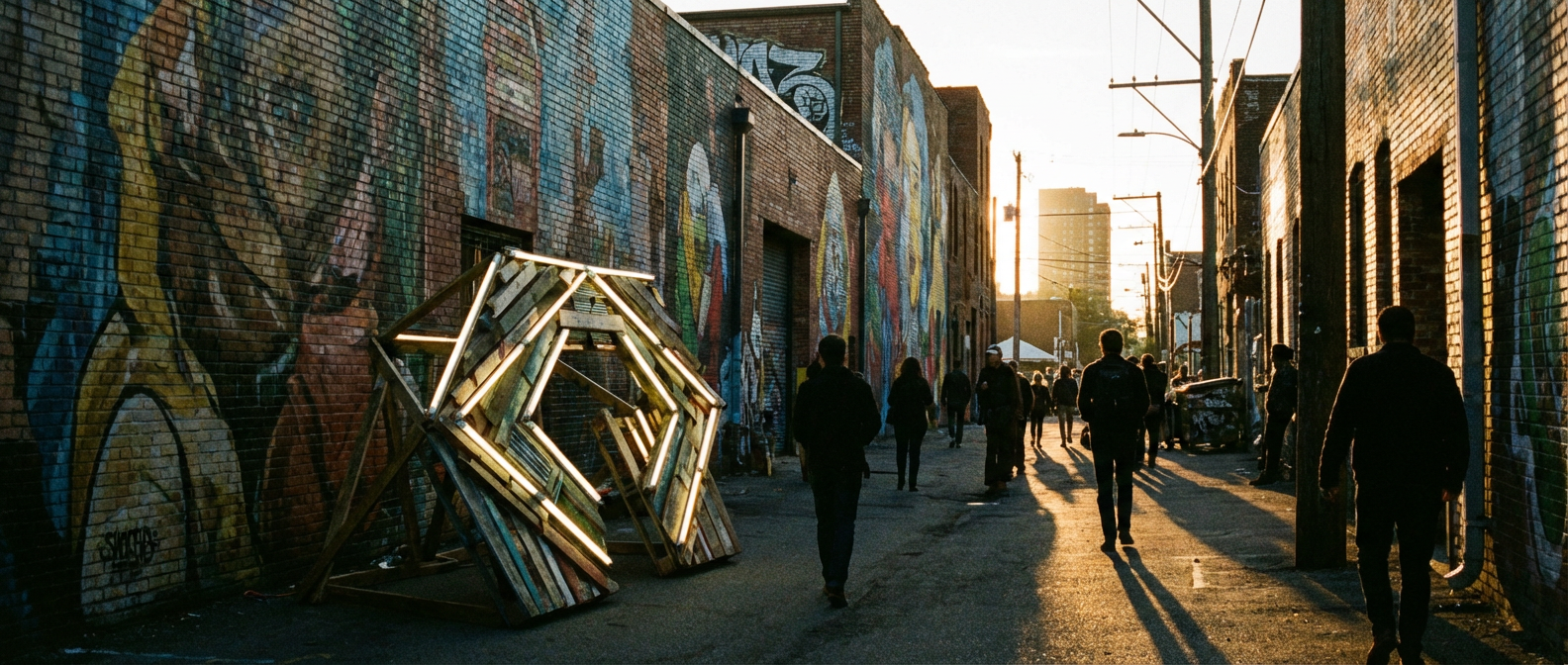
It’s also the final nail in the coffin for this neighborhood. Within six months, I guarantee you’ll see luxury condos marketed with phrases like “arts district” and “authentic urban culture.” The Martinez family, who ran that corner store for two decades before getting priced out last spring, will probably see the mural on some developer’s Instagram as proof of how much this area has “improved.”
This is the contradiction that’s been eating at me lately. How do you celebrate incredible art while acknowledging that it’s often the very thing that makes neighborhoods unaffordable for the people who lived there first? Because here’s what nobody wants to say out loud: sometimes street art isn’t rebellion anymore. Sometimes it’s the welcome mat for displacement.
When Rebellion Gets a Business License
I’ve been documenting this city’s street art scene for seven years now, back when getting permission for a legal wall meant knowing someone who knew someone, not filling out forms at the city’s new “Public Arts Initiative.” The shift has been subtle but unmistakable. What started as genuine community expression has turned into curated “authentic experiences” for people who can afford $3,500 studio apartments.
Take the difference between Rosa’s piece in the underpass versus the commissioned murals going up in the new mixed-use development six blocks away. Rosa’s work emerged from living here, from walking these streets daily, from understanding the rhythms of who gets off the bus when. The commissioned pieces, beautiful as they are, feel like they’re performing neighborhood character rather than expressing it.
The city’s mural program requires applications, insurance, community input meetings. All reasonable things that also systematically exclude the kind of spontaneous, urgent art that actually comes from communities under pressure. When street art becomes bureaucratic, it stops being street art and becomes public decoration.
Don’t get me wrong, I know artists need to eat. I know legal walls mean fewer artists getting arrested or having their work buffed. But watching how these installations get used in marketing materials makes me wonder if we’ve traded artistic freedom for a kind of cultural packaging that helps everyone except the people who inspired the art in the first place.
The Instagram Problem
Here’s where I get really uncomfortable, because I’m part of this problem. Every time I post about a new piece, tag the location, write about how “gritty” or “authentic” a neighborhood feels, I’m essentially creating a treasure map for people looking for the next cool place to live. My followers include urban planners, real estate agents, and plenty of people who see my posts about emerging artists as early indicators of where to invest.
The algorithm doesn’t distinguish between celebration and commodification. That photo of the incredible stencil work under the 15th Street bridge gets the same treatment whether it’s being shared by someone who wants to support the artist or someone who’s scouting locations for their next rental property purchase.
I’ve started noticing how quickly areas change after they get social media attention. The alley behind the community center was a quiet spot where local artists could experiment without much interference. Then someone with 50K followers discovered it, posted about the “hidden gem,” and within months it was packed with photography shoots and bachelor parties posing in front of work they didn’t understand or respect.
The artists themselves are caught in this bind too. They need visibility to make a living, but visibility changes the context of their work in ways they can’t control. I’ve watched several artists I respect struggle with whether to embrace larger platforms or try to keep their work within community spaces that are increasingly hard to maintain.
What Community Actually Looks Like
Real community art doesn’t announce itself with sleek websites and press releases. It happens in the conversations between the artist and whoever happens to be sitting on their stoop. It responds to immediate local concerns, not tourism boards. It gets painted over, tagged on, argued about by people who have actual stakes in what happens to the wall.
Some of the most powerful pieces I’ve encountered have been temporary by design. The memorial that appeared overnight after the shooting on Valley Street last year. The wheatpaste series documenting families being evicted from the housing development before it got demolished. The collaborative mural that grew organically over months as different artists and community members added elements.
These works didn’t last, weren’t photographed much, and definitely didn’t make it into any tourism guides. But they did something that a lot of more permanent installations struggle with: they belonged to the people who lived with them daily. They were art made by and for a specific place and time, not art made to attract people from somewhere else.
I think about the difference between art that helps a community and art that simply proves a community exists. The latter tends to survive longer, get more funding, and attract more attention. But it’s often the former that actually matters to people’s daily lives.
Living With the Contradiction
I don’t have clean answers here, which frustrates me because I want to support incredible artists while also being honest about the economic forces that shape where and how their work appears. What I’ve started doing is paying more attention to who benefits from any given project, who’s displaced by it, and who gets to make decisions about what happens next.
Sometimes that means celebrating commissioned work that genuinely emerges from community input and provides fair compensation to local artists. Sometimes it means highlighting guerrilla pieces that might not photograph as well but capture something urgent and specific. And sometimes it means admitting that my enthusiasm for a beautiful mural doesn’t erase the fact that it’s functioning as a marketing tool for displacement.
The art itself isn’t the problem. The problem is an economic system where cultural energy becomes a commodity that’s sold back to the highest bidder. But until we figure out how to change that larger dynamic, those of us documenting and celebrating this work have to reckon with our own role in processes we don’t intend to support.
I’d love to hear how other people are thinking through these tensions. Are you seeing similar patterns in your area? How do you balance supporting artists with being honest about gentrification? Hit me up, because these conversations feel more urgent every time I walk through a neighborhood that’s transforming faster than the people who live there can afford to keep up with.