The Theater Gets Full Again
There’s this moment happening right now in cities everywhere, and honestly, I kept waiting for someone else to name it first. But here we are in 2026, and the arthouse theaters that spent years feeling like beautiful tombs are suddenly packed. Not with the usual suspects either. I’m talking about crowds of people under thirty who showed up at New York’s Metrograph in January to sit through every single one of Chantal Akerman’s films back-to-back. All three consecutive weekend marathons sold out. Eighteen hundred tickets gone.
This isn’t nostalgia wearing a new vintage flannel shirt. This is something real. The data backs it up too, if you care about that sort of thing. Streaming platforms like Criterion Channel’s editorial on the slow cinema surge have watched their users aged eighteen to twenty-eight increase their viewing hours for slow cinema by forty-five percent in just a year. We’re talking about films where the average shot holds the frame for longer than fifteen seconds. The kind of movies that used to get described as “challenging” in that tone people use when they mean “nobody’s going to watch this.”
What Slow Cinema Actually Offers
Here’s the thing about slow cinema that nobody talked about when I was younger: it’s a completely different contract between the filmmaker and the viewer. Akerman, Tarkovsky, Michael Snow, these directors aren’t trying to manipulate your attention span or make you feel something in the next ninety seconds. They’re creating space. Real, actual space where your mind can go somewhere.
The research is pretty striking, actually. A study that came out late in 2025 measured cortisol levels in people after they watched slow films versus action-heavy stuff, and the slow cinema viewers had measurably lower stress markers afterward. Their bodies literally relaxed in a way that the latest superhero tentpole couldn’t match. That’s not a small thing. That’s a generation figuring out that sitting still for six minutes while the camera holds on a window might be more restorative than anything an algorithm could suggest.
I talked to a few people at a London screening last year, and they described it the same way: like pressing pause on the entire rest of their lives. No notifications creeping in at the edges. No sense that they should be somewhere else. Just the film, the theater, and time moving at its own pace.
How This Became a Movement
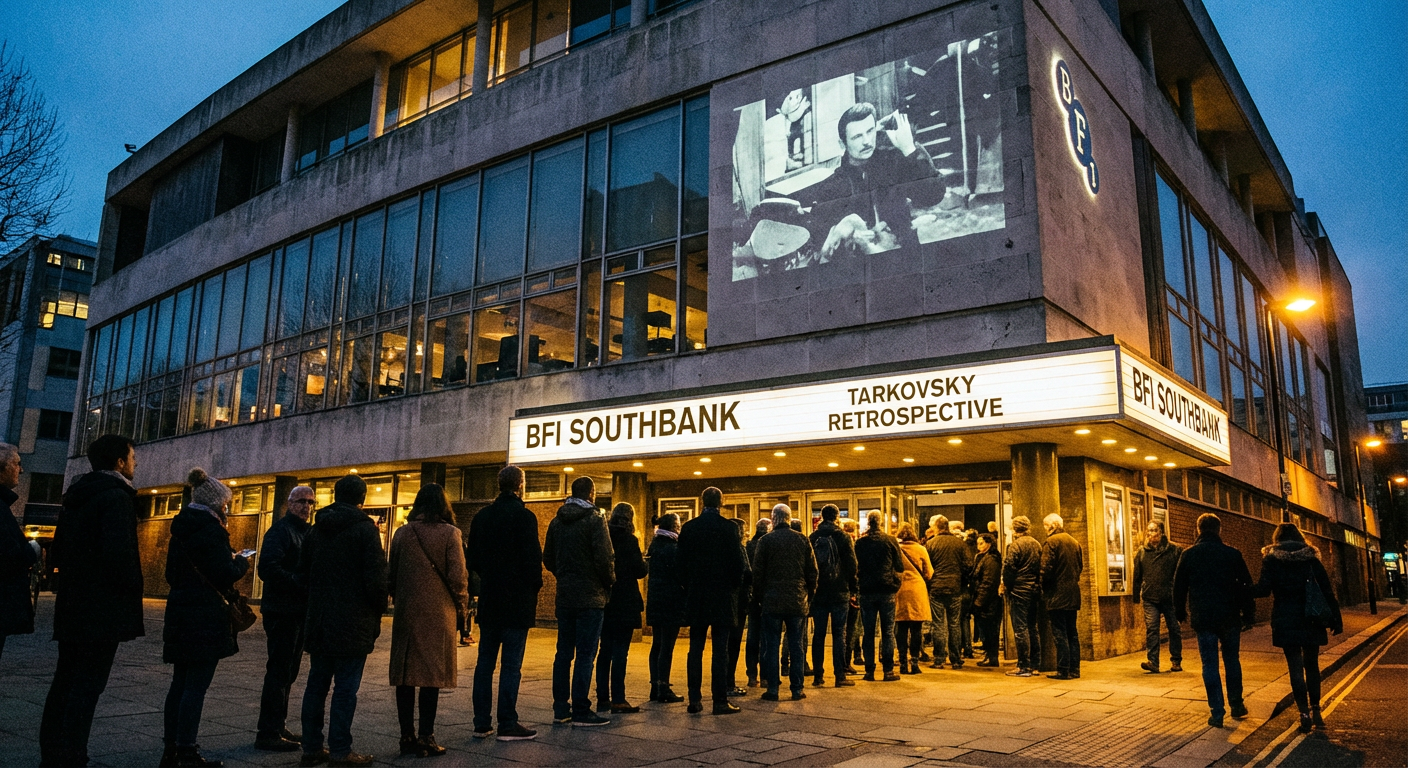
The London Film Festival’s Tarkovsky retrospective in 2025 became BFI’s 2025 repertory programming report about what the highest-attended repertory series looked like since 2019. Over six thousand people in three weeks. People who had never seen Stalker or Mirror in a theater lined up for it. Some of them had only known these films through streaming, compressed and pixelated on smaller screens, and they wanted to understand what they were actually supposed to feel like.
What really crystallized it for me was watching the slow film challenge explode online in February this year. Someone started it on Film Twitter and Letterboxd, just asking people to commit to watching one canonically slow film per week for a month. By the time February ended, that hashtag had over two point one million posts. Two million. That’s not a niche anymore. That’s a shift big enough that the algorithm had to notice it.
None of this came from the top down. No marketing team decided that Gen Z needed to watch long takes. It started with people discovering Akerman or Tarkovsky online, getting intrigued, and then realizing that the experience of watching them in a theater with other people created something that streaming alone couldn’t deliver. Community, stillness, and the shared act of being bored in the best possible way.
What We’re Really Losing and Keeping
There’s something elegiac about watching arthouse theaters come alive again, even as we watch other things disappear. The programmers, the projectionist who actually understood their equipment, the regular who knew everyone’s name and held your favorite seat. Some of those spaces didn’t make it. Some cities just don’t have them anymore. But the ones that survived are suddenly essential again, and that matters.
These theaters were never about size or spectacle. They were always about being a place where a certain kind of cinema could live, could breathe, could find the people who needed it. Now those people are young and they’re showing up on purpose. They’re making choices about their time and their attention. They’re saying yes to something that doesn’t promise immediate gratification, and finding something real in that commitment.
What Happens Next
I don’t know if this sticks. I genuinely don’t. Cultural moments shift and fragment and disappear sometimes. But what I do know is that something changed when thousands of people made space in their lives for a seven-minute shot of a building at dusk. Something shifted when silence in a theater full of strangers started feeling radical.
If you’ve been thinking about catching a slow cinema screening and talking yourself out of it, this is your sign to actually go. Call ahead if your local arthouse has a number. Show up a few minutes early. Talk to people before the movie starts. That’s where the real story is happening right now, written in real time by people who just decided they wanted something different. What are you discovering in your city right now that people should know about?