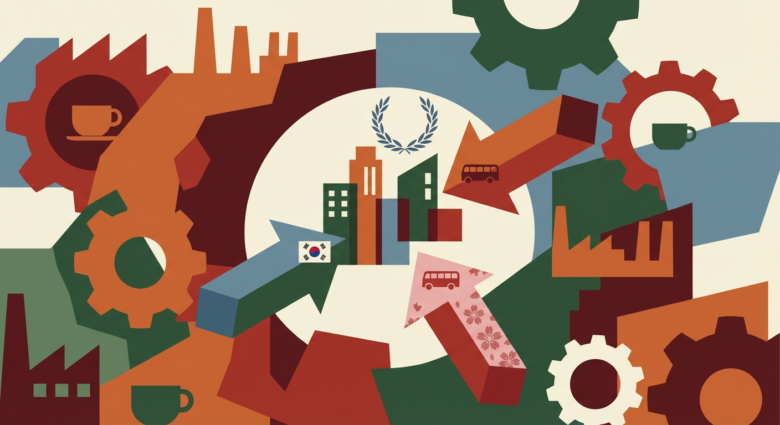
The Coronation No One Expected
I keep thinking about the moment Time Out announced their 2024 coolest neighbourhoods list. You know that feeling when your favorite band gets picked up by a major label and suddenly everyone’s listening, and you’re genuinely happy for them but also aware that something has shifted irreversibly? That’s Seongsu-dong right now. Time Out World’s Coolest Neighbourhoods 2024 ranked this Seoul district above Peckham in London, above Shimokitazawa in Tokyo, above literally every other neighborhood on Earth according to their survey of twenty thousand city dwellers. For years, Brooklyn held this title like a security blanket. It was shorthand for everything cool: the artist lofts, the independent coffee roasters, the restaurant owners who knew your order before you ordered it. Now that crown sits on someone else’s head, and we’re all trying to figure out what it means.
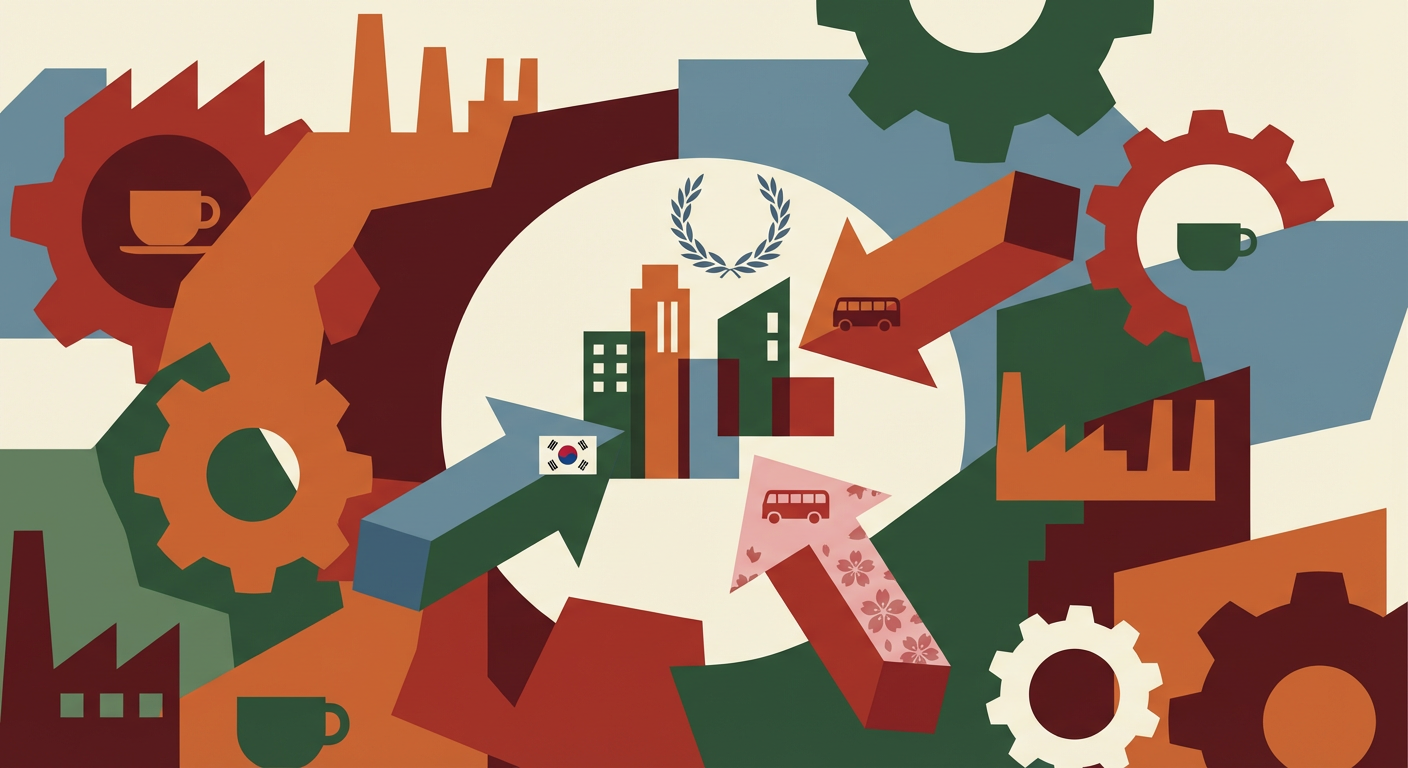
What strikes me most is how sudden this feels. Seongsu-dong didn’t trickle into the global consciousness gradually. The data tells the story better than any anecdote could. Google search interest for “Seongsu Seoul” jumped three hundred and ten percent between January 2023 and January 2025. That’s not growth. That’s a cultural moment crystallizing in real time.
From Tanneries to Concept Stores: The Regeneration Story
Here’s the thing about Seongsu-dong that makes it different from Brooklyn’s gradual gentrification: it was literally built on industrial ruins. The neighborhood spent decades as Seoul’s leather-tannery hub, a gritty working-class zone where the smell of processed hides saturated the air and nobody thought about it as a destination. That’s the raw material most urban regeneration stories start with, but what happened here was engineered with remarkable speed and intention.
Commercial real estate prices climbed forty percent between 2022 and 2024. That number matters because it reflects not just investor enthusiasm but actual boots on the ground. Gentle Monster opened a flagship space. New Balance planted their concept store there. Maison Margiela arrived. These aren’t accidents. When luxury brands move into a neighborhood, they’re reading the same cultural signals we are. They’re betting that the coolness is real, not manufactured.
The Seoul Institute published research in 2023 examining exactly this phenomenon, documenting how post-industrial creative clusters follow a predictable pattern. The theory goes like this: you inherit an industrial district with cheap real estate and high ceilings. Small galleries and independent boutiques arrive first, drawn by possibility and affordability. Then the narrative starts circulating. Then the brands notice. Then the tourists notice. Then the prices make it impossible for the people who started the whole thing to stay. It’s a cycle we’ve seen play out in every major city.
The Tourism Wave Nobody Was Quite Ready For
The Korea Tourism Organization reported that inbound tourism hit a record 17.4 million visitors to South Korea in 2024. More striking: seventy-eight percent of those arrivals listed Seoul as their primary destination. That’s not a coincidence. That’s the result of a neighborhood becoming famous, becoming a destination, becoming essential to the experience people think they should have when they visit.
Walk through Seongsu-dong now and you’ll see groups of visitors with phones out, documenting storefronts and street corners. They’re not lost. They’ve got it marked on their maps. They’ve researched the coffee shops and the galleries and the vintage bookstores. They read the same articles we read, saw the same Instagram posts, heard through the same networks that this is where it’s happening. Tourism becomes a kind of validation, but it also becomes a kind of pressure.
I talked to a gallery owner there last month who said something that stuck with me. She said the neighborhood used to feel like a secret, and now it feels like an exhibition of itself. The difference is subtle but crucial. When a place is secret, it exists for the people who live there, for the artists and entrepreneurs and weird community members who chose it before anyone else knew to choose it. When it becomes an exhibition, it exists for the gaze of others.
The Real Loss Underneath the Glamour
Let’s be honest about what’s happening. Seongsu-dong’s rise to global cool is genuine, but it’s also a story about displacement dressed up as cultural vitality. The tanneries that defined the neighborhood for generations have nearly disappeared. The families who lived there, who worked there, who built something from nothing on those streets, they’re mostly gone now. Replaced by people who arrived after the transformation was already underway, or by nobody at all, just commercial space.
This is where Brooklyn’s story becomes instructive and melancholy. Brooklyn was supposed to be different. It was supposed to be sustainable cultural cool, but it turned into a real estate empire, and now the artists who made it cool are scattered across Queens and deeper into Brooklyn and the outer boroughs, always one step ahead of the development that follows them. The question for Seongsu-dong is whether Seoul is watching this pattern closely enough to do something different.
There’s also the question of authenticity, which I know sounds precious but isn’t. When you can Google a neighborhood’s cool factor, when you can buy a plane ticket specifically to visit it, when luxury brands have already picked it clean and the boutique hotel is being built on the lot where a community center used to be, something has shifted. The cool becomes real enough for marketing purposes but hollow underneath. It becomes a product.
What Comes Next
Brooklyn’s reign as the world’s cultural shorthand wasn’t infinite, and Seongsu-dong’s won’t be either. In two years, three years, five years, another neighborhood somewhere will register on the global consciousness. Maybe it’ll be in Bangkok or Mexico City or Lagos or somewhere we haven’t thought to look yet. Cities keep renewing themselves, which is natural and necessary and always comes at a cost.
What I find myself wanting to know is what Seongsu-dong will look like when the next big thing arrives elsewhere. Will it hold onto some version of what made it interesting, or will it calcify into a museum of its own past cool? Will the people who built something authentic there be able to stay, or will they have already been priced out? These aren’t rhetorical questions. They matter. They’re the difference between a neighborhood that evolved and one that was merely consumed.
If you’re thinking about visiting Seongsu-dong, go. The coffee really is excellent. The galleries show work that makes you think. The energy is real. Just know that you’re stepping into a place that’s aware of being watched, and maybe that awareness changes something fundamental about what you’ll find there. Or maybe it doesn’t. Maybe cool is resilient enough to survive its own success. Tell me what you discover when you get there.