The Numbers Don’t Lie, But They Do Tell an Uncomfortable Truth
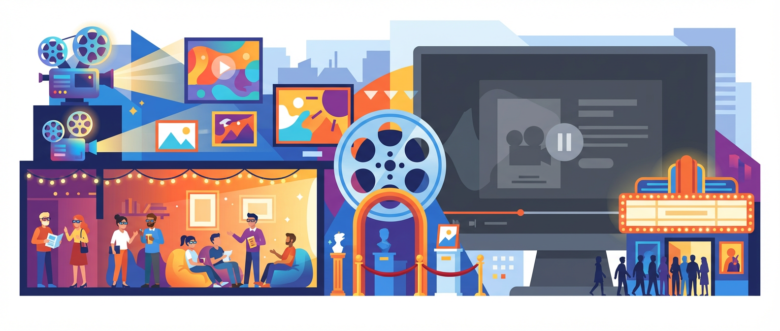
Here’s what’s happening: there are now more than 870 registered micro-cinema venues across the United States. That’s more than double what existed just three years ago. The Cinema Foundation Independent Venue Census 2026 tracked this explosion with the kind of precision that makes you realize something fundamental has shifted in how we consume culture. We’re not talking about a trend gaining momentum. We’re talking about a wholesale abandonment of the old model.
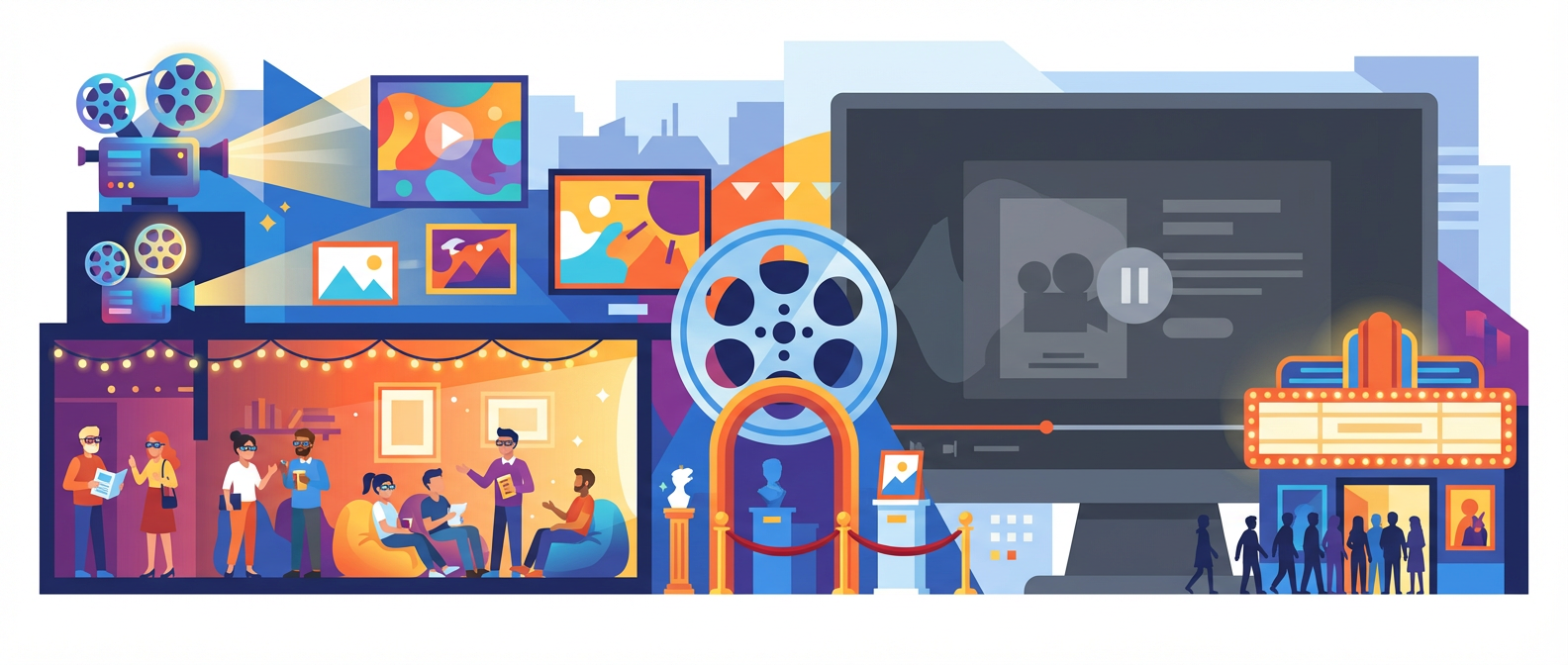
What makes this uncomfortable is that it arrived quietly, almost while nobody was looking at the right thing. Everyone was so busy debating whether streaming killed cinema that they missed the moment when cinema killed streaming, or at least made it look like the boring option at the party. In cities under 500,000 people, ticketed film screening events grew 78 percent faster than live music events in 2025. That’s the kind of stat that should make venue owners and artists pay attention, because it suggests something deeper is happening beyond just nostalgia or ironic consumption.
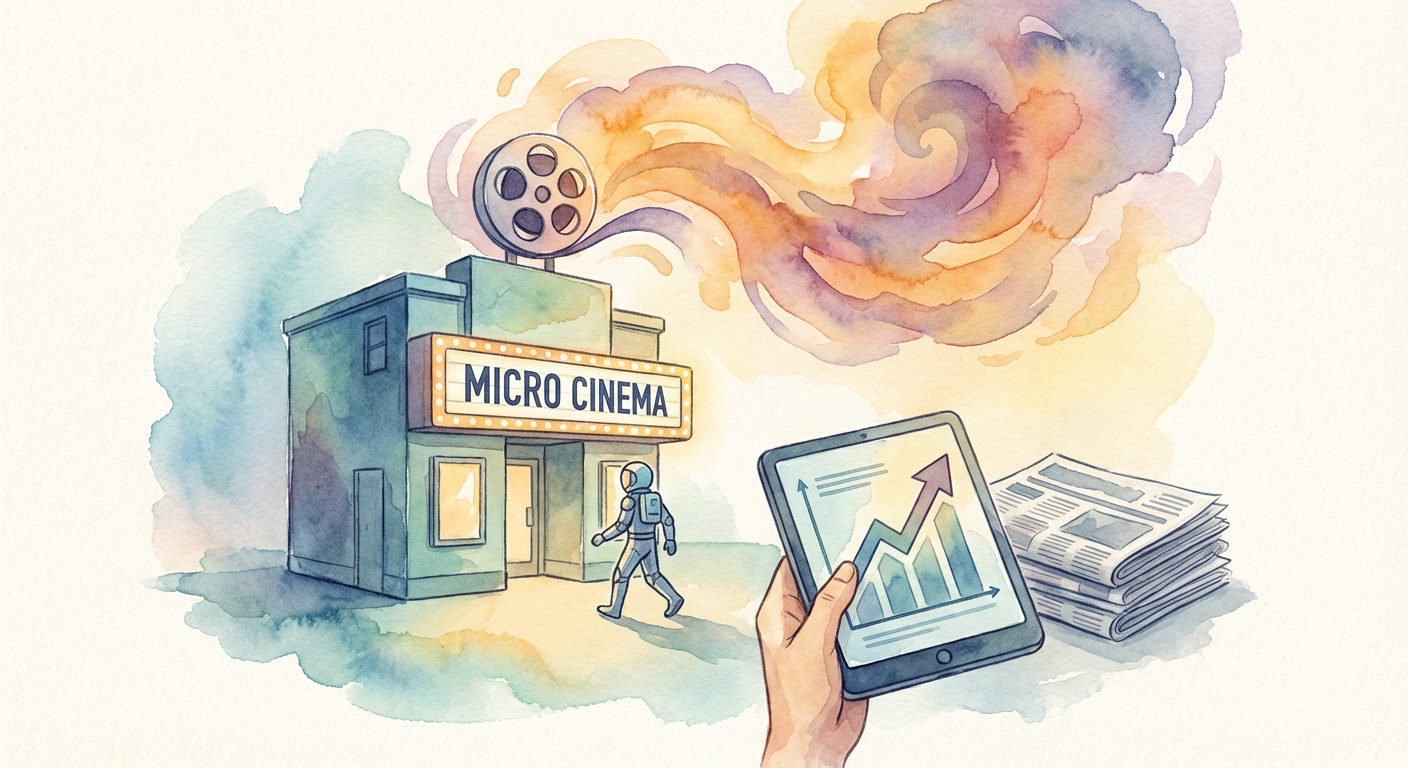
Why Your Local Micro-Cinema Became the Gallery Opening Everyone Actually Wants to Attend
Walking into a micro-cinema in 2025 feels like what galleries used to feel like before they became Instagram backdrops and money laundromats. There’s intention in the space. There’s a human being who curated this specific film for this specific moment, and they’re betting their reputation on it. That’s not nothing.
The curatorial impulse has migrated. We’ve spent the last decade watching galleries strip themselves of meaning in pursuit of accessibility and sponsorship deals. A micro-cinema, by contrast, has to trust its audience’s actual taste. There’s no algorithm smoothing out the rough edges. Someone looked at your city and said, “These people need to see this,” and they made it happen. The MUBI Go Live Program Details shows how seriously the streaming world has taken this shift. They reported a 55 percent increase year-over-year in partnerships with physical screening spaces, essentially admitting that their platform needed bodies in rooms to matter.
This is what authenticity actually looks like when it’s not being performed for content. You buy a ticket, you show up, you sit with strangers who want to see the same thing you do, and then you leave changed or not changed. Either way you had a real experience. That’s become radical in 2025.
The Bong Joon-ho Effect: How Grassroots Buzz Beat the Marketing Machine
Bong Joon-ho’s 2025 film got screened at over 200 independent micro-venues before its wide release. Two hundred places. Let that land. The studio spent $200 million on traditional marketing, but it was the independent screenings that generated the actual buzz. According to Variety’s tracking, the grassroots campaign was doing more heavy lifting than the budget was. This wasn’t accidental. This was a recognition that people don’t trust ads anymore, but they trust the person who texted them saying, “You have to see this film, I’m driving you to the micro-cinema next Friday.”
What Bong’s team figured out is that micro-cinema screenings work as cultural validators in a way that nothing else does right now. You can’t fake a sold-out screening. You can’t Photoshop genuine community interest. When a film travels to 200 independent venues and people show up because they actually want to be there, that’s a signal. That’s a story. That becomes the story.
Cinespia and the Resale Market That Proves We’re Serious
Cinespia, the Los Angeles-based collective that runs outdoor and micro-venue screenings, sold out every single one of their 42 events in 2025. Not most. All of them. And here’s the part that matters: secondary market tickets were averaging $85 on StubHub. People who couldn’t get in the first time were willing to pay that much for something they didn’t even see. That’s not nostalgia. That’s faith in curation.
The resale market for screening events shouldn’t exist at this scale. It does because Cinespia has built something that functions more like a cultural institution than a booking agency. They understand the real economy: they’re not selling tickets to movies. They’re selling admission to something that matters. They’re selling the story you’ll tell tomorrow about where you were tonight and who you were with and what you felt when the lights came down.
The Uncomfortable Reckoning This Creates for Streaming
Netflix doesn’t know what to do with this. Neither does Apple TV. They tried bundling, they tried originals, they tried interface redesigns. None of it solved the basic problem, which is that watching something alone on a screen, no matter how good the screen is, doesn’t feel like culture. It feels like consumption. It feels like the default option when nothing better is available.
Micro-cinema solved that by doing something radical: it went small and local and trusted that people wanted to gather. It assumed that film mattered enough to get off your couch for. That was the gamble, and it worked so completely that we now have nearly three times as many independent venues as we did in 2022. That’s not a correction. That’s a replacement.
The real question now is whether this sticks or whether it’s a reaction cycle that will level off. Honestly, I don’t know. What I do know is that I’ve been to three micro-cinema screenings in the last month, and I remember all of them with perfect clarity. I couldn’t tell you what I watched at home last week. There’s something in that difference worth paying attention to, something about how we’re wired that the algorithm doesn’t account for. The people running these spaces understand that. That’s why they’re winning.